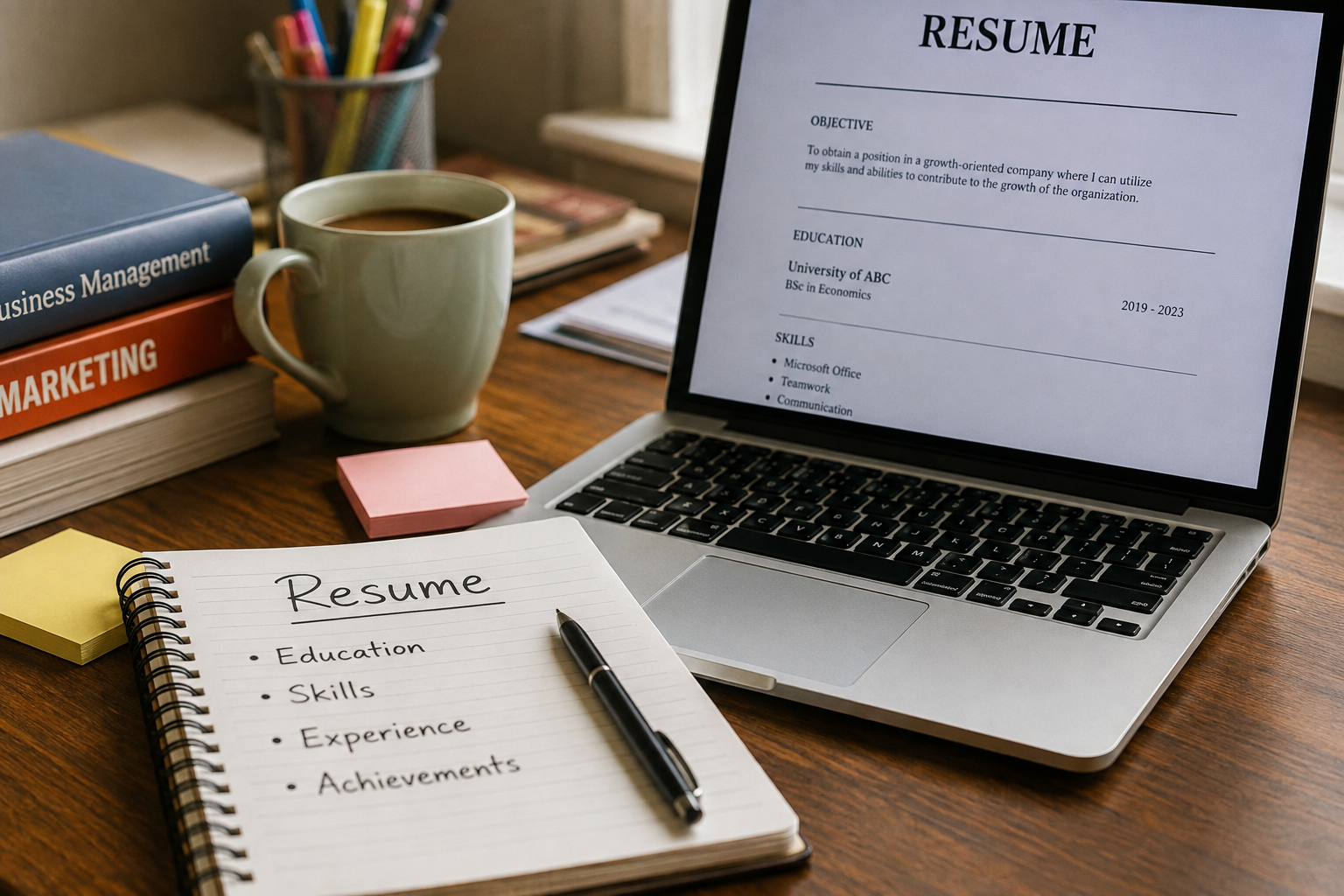
Building a strong resume can feel difficult when you are still a student and do not have much work experience. Many students think a good resume is only for people who already have years of professional experience. This is not true. Students can start building a strong resume long before graduation. The important thing is to understand what employers look for and how to present your education, skills, projects, activities, and achievements in a clear way.
A student resume does not need to be filled with long work histories. Instead, it should show your potential, abilities, interests, and willingness to learn. Whether you are applying for an internship, part time job, scholarship, volunteer position, or your first full time job, a well prepared resume can help you make a good first impression.
Start With Your Education
For most students, education is one of the strongest sections of a resume. If you do not have much professional experience, your education can show employers what you are currently learning and what areas interest you.
Include your school, college, or university name, your degree or program, and your expected graduation date. You can also mention your major, relevant courses, academic achievements, or a strong grade point average if it is something you are proud of.
For example, if you are studying computer science and applying for a technology internship, you can mention courses related to programming, databases, web development, or software development. This helps employers understand that you have already started developing knowledge related to the position.
Your education section should be simple and easy to read. Avoid adding information that is not useful for the job you are applying for.
Develop Useful Skills
One of the best ways students can start building a strong resume is by learning useful skills. Skills can make your resume stronger even when you have limited work experience.
Think about the skills you already have. These may include communication, teamwork, writing, research, public speaking, time management, problem solving, leadership, computer skills, or organization.
You can also develop technical skills depending on your career goals. For example, students interested in marketing can learn social media management, content writing, search engine optimization, email marketing, or basic graphic design. Students interested in technology can learn programming languages, website development, data analysis, or software tools.
Do not simply add skills to your resume because they sound impressive. Make sure you actually understand and can use the skills you mention. If possible, show how you have used those skills through projects, school activities, volunteering, or other experiences.
Create Personal Projects
Personal projects are a great way for students to build a strong resume. They show that you can take an idea and turn it into something useful.
A project can be related to your studies or your career interests. For example, a student interested in writing could start a blog and publish useful articles. A computer science student could create a simple website or application. A marketing student could create a sample marketing campaign for a fictional business.
You do not need an expensive project or a complicated idea. What matters is what you learned and what you achieved.
When adding a project to your resume, explain what you worked on and which skills you used. If the project produced a measurable result, include that result. This gives employers a better understanding of your abilities.
Look for Internships
Internships are one of the best ways to gain experience before graduation. Even a short internship can give you something valuable to add to your resume.
An internship allows you to experience a real working environment and understand how professional teams operate. You may also learn how to communicate with coworkers, manage deadlines, complete tasks, and solve workplace problems.
When applying for internships, do not worry if you do not meet every requirement in the job description. Many internships are designed for students who are still learning.
After completing an internship, update your resume with the responsibilities and skills you gained. Focus on what you actually did instead of simply writing the name of the company.
Get Volunteer Experience
Volunteer work can also help students build a strong resume. It shows that you are willing to contribute your time and take responsibility.
You can volunteer at a school event, community organization, nonprofit group, educational program, or local activity. The experience does not have to be directly related to your future career.
For example, if you helped organize a community event, you may have developed teamwork, communication, planning, and leadership skills. These skills can be valuable in many different careers.
The key is to explain your contribution clearly. Instead of simply writing that you volunteered, describe the work you completed and the skills you used.
Take Part in School Activities
Students often forget that school and university activities can provide valuable resume experience. Clubs, societies, competitions, sports teams, student organizations, and academic events can all help you develop useful skills.
If you became a club leader, organized an event, managed social media, helped new students, or participated in a competition, you may already have experiences worth adding to your resume.
For example, organizing a student event can demonstrate planning and leadership. Participating in a debate competition can show communication and public speaking skills. Working on a group project can demonstrate teamwork and cooperation.
Think about what you have done outside the classroom and consider how those activities helped you grow.
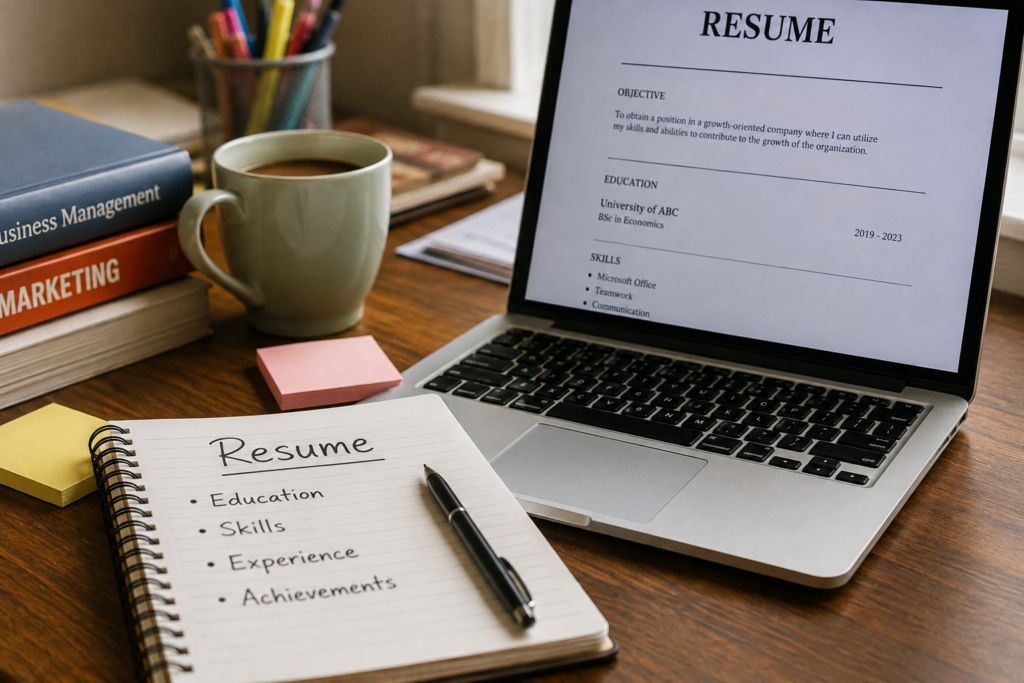
Focus on Achievements
A strong student resume should not only list responsibilities. It should also highlight achievements.
An achievement can be anything that shows effort, improvement, leadership, or success. You may have won a competition, completed an important project, improved your grades, received an academic award, organized an event, or helped a team achieve a goal.
Try to explain achievements with specific details when possible. For example, instead of saying that you helped with a school event, you could explain that you helped organize an event attended by a large number of students.
Specific information makes your resume more interesting and gives employers a clearer picture of what you can do.
Learn How to Write a Good Resume
Building a strong resume is not only about collecting experiences. You also need to learn how to present those experiences properly.
Keep your resume clear, organized, and easy to read. Use simple language and avoid unnecessary information. Your resume should quickly tell the reader who you are, what you can do, and what kind of opportunity you are looking for.
For students, a one page resume is often enough. You can include your contact information, education, skills, projects, experience, achievements, and relevant activities.
Avoid using long paragraphs in your resume. Use short descriptions that explain your responsibilities and results. Also check your spelling and grammar carefully because small mistakes can make your resume look less professional.
Customize Your Resume for Each Opportunity
One common mistake students make is using the exact same resume for every application. A better approach is to customize your resume based on the position.
Read the job description carefully and identify the skills and qualifications the employer is looking for. Then highlight the experiences and skills you have that match those requirements.
For example, if a company is looking for someone with strong communication skills, make sure your resume includes relevant experiences such as presentations, public speaking, customer service, teamwork, or student leadership.
Using relevant keywords can also make your resume easier for employers and resume screening systems to understand. However, only use keywords that honestly describe your skills and experience.
Build an Online Professional Presence
Students can also strengthen their resume by creating a professional online presence. A professional profile can help employers learn more about you and your work.
You can create a professional profile that includes your education, skills, projects, certifications, and achievements. If you have completed projects, you can also create a simple online portfolio.
For students in writing, design, programming, photography, marketing, or other creative fields, an online portfolio can be especially useful. It gives employers an opportunity to see examples of your actual work instead of only reading about your skills.
Make sure your public online profiles present you professionally. Employers may search for candidates online before making hiring decisions.
Earn Relevant Certifications
Certifications can also help students improve their resumes. They show that you have taken the time to learn something beyond your regular studies.
Choose certifications that are relevant to your career goals. There is no need to collect many certificates just to make your resume longer. A few useful certifications can be more valuable than a long list of unrelated ones.
You can find courses in areas such as digital marketing, computer skills, data analysis, communication, project management, programming, design, and other professional subjects.
When selecting a course, focus on learning practical knowledge that you can use in projects or future jobs.
Keep Improving Your Resume
Your resume should not be something you create once and forget. As you gain new skills, projects, experiences, and achievements, update it regularly.
A good habit is to review your resume every few months. Add new accomplishments and remove information that is no longer relevant. Keeping your resume updated will also make future job applications easier because you will not have to remember everything at the last minute.
You can also ask a teacher, career advisor, mentor, or experienced professional to review your resume. Another person may notice mistakes or suggest improvements that you did not see yourself.
Final Thoughts
Students do not need years of professional experience to build a strong resume. They can start today by improving their skills, completing personal projects, joining useful activities, gaining volunteer experience, looking for internships, and recording their achievements.
The most important thing is to start early. Every useful experience can become part of your professional story when it is presented properly. Do not wait until graduation to think about your resume. Start building it while you are still studying.
A strong student resume is not about making yourself look more experienced than you really are. It is about showing your real abilities, your willingness to learn, and the progress you have already made. If you continue learning and gaining practical experience, your resume will naturally become stronger over time.
Remember that your first resume does not have to be perfect. Start with what you have, improve it regularly, and keep looking for opportunities to learn. With consistent effort, you can build a resume that gives employers a clear reason to consider you for internships, jobs, and other opportunities.