Procrastination is one of the biggest problems students face while studying. You may have a lot of work to complete, but instead of opening your book, you check your phone, watch videos, scroll through social media, or simply sit and think about starting later. Before you realize it, several hours have passed and your study work is still waiting for you.
The good thing is that procrastination is not something you have to live with forever. You can learn how to stop procrastinating while studying by understanding why you delay your work and by making a few simple changes to your daily routine. You do not need to study for ten hours every day. You simply need to start your work at the right time and stay focused for a reasonable amount of time.
What Is Procrastination While Studying?
Study procrastination means delaying your study tasks even when you know they are important. For example, you may have an exam next week, but you keep telling yourself that you will start tomorrow. When tomorrow comes, you make the same promise again.
Sometimes procrastination happens because a subject feels difficult. Sometimes students feel tired, bored, confused, or worried about getting poor results. The brain naturally looks for something easier and more enjoyable. This is why checking a phone can feel much easier than reading a difficult chapter.
Understanding this can help you stop blaming yourself. The goal is not to become a perfect student overnight. The goal is to build better study habits one step at a time.
Find Out Why You Procrastinate
The first step to stop procrastinating while studying is to understand the reason behind it. Different students procrastinate for different reasons.
You may procrastinate because your study task is too large. Looking at a book and thinking that you have to study the whole chapter can make the task feel stressful. You may also procrastinate because you do not know where to start.
Another common reason is fear of failure. If you think a subject is very difficult, you may avoid studying because you are afraid that you will not understand it. Some students also wait for the perfect mood to study. They think they will study when they feel motivated, but that perfect moment often never comes.
Once you know your reason, it becomes easier to find a solution.
Start With a Very Small Task
One of the easiest ways to stop procrastinating is to make the first step very small. Instead of telling yourself, “I have to study for three hours,” tell yourself, “I will read two pages.”
A small task does not feel as stressful. Once you begin, you may naturally want to continue. Starting is often harder than continuing.
For example, if you need to prepare for a science exam, do not think about the entire syllabus. Open your book and read one topic. Write down three important points. After completing that small task, move to the next one.
Small progress can create motivation. You do not always need motivation before starting. Sometimes motivation comes after you begin.
Use the Five Minute Rule
The five minute rule is a simple technique for students who find it difficult to start studying. Tell yourself that you only need to study for five minutes.
During those five minutes, remove distractions and focus only on your study task. After five minutes, you can decide whether you want to continue.
In many cases, you will continue because your mind has already adjusted to the task. The hardest part was simply getting started.
This technique is especially useful when you feel tired or have been avoiding a subject for several days.
Make a Simple Study Schedule
A study schedule can help you stop procrastinating because it removes the need to decide what to do every time you sit down to study.
You do not need a complicated timetable. Write down the subjects you need to study and decide when you will study them. Keep your schedule realistic.
For example, you could study mathematics from 5 PM to 6 PM, take a short break, and then study English from 6:30 PM to 7:15 PM.
Do not fill every minute of your day with study sessions. Give yourself time for meals, rest, family, exercise, and entertainment. A realistic study routine is easier to follow than a schedule that is too strict.
Remove Your Phone While Studying
Your phone can be one of the biggest causes of study procrastination. Even if you plan to check one message for a minute, you can easily spend thirty minutes scrolling.
When you are studying, keep your phone away from your desk. Put it in another room if possible. Turn off unnecessary notifications and avoid opening social media during your study session.
If you need your phone for studying, use it only for the specific task. For example, if you need an online dictionary, use the dictionary and then return to your work.
Creating a distraction free study environment can make a big difference in your concentration.
Break Large Tasks Into Smaller Parts
Large assignments can make students feel overwhelmed. When a task looks too big, procrastination becomes more likely.
Instead of writing “complete history assignment” on your study list, break it into smaller tasks. You could write the introduction first, find important information next, write the main paragraphs, and then check your work.
The same method works for exam preparation. Instead of writing “study biology,” choose a specific chapter or topic.
Small tasks are easier to understand and easier to complete. Every completed task also gives you a feeling of progress.
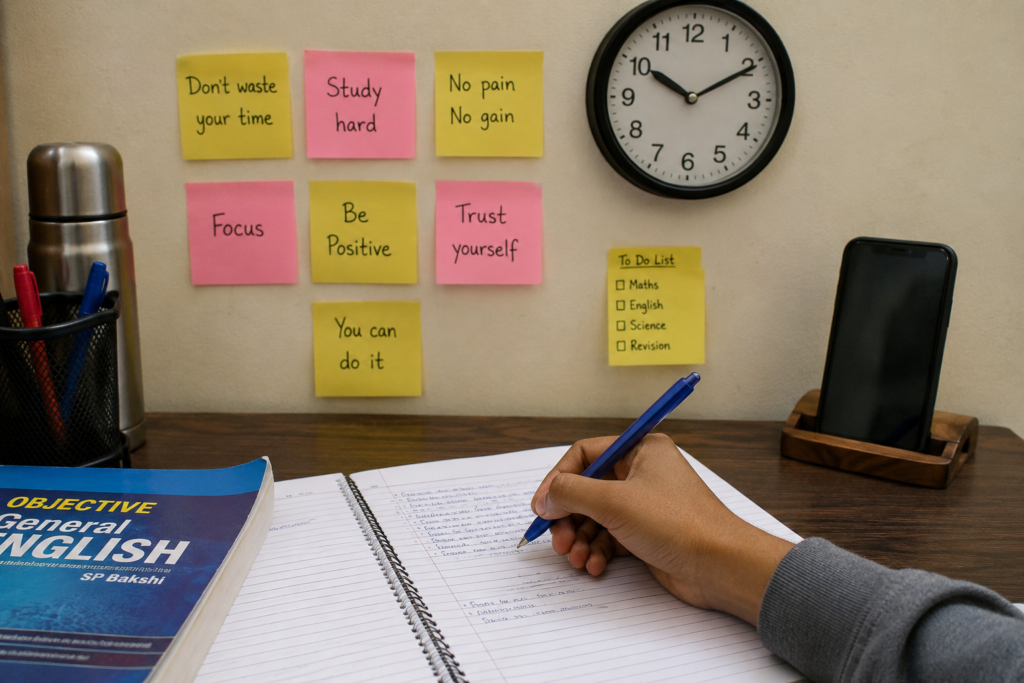
Try the Pomodoro Technique
The Pomodoro Technique is another useful way to improve study focus. It usually involves studying for a short period and then taking a short break.
You can start with 25 minutes of focused studying followed by a five minute break. After several sessions, take a longer break.
During the study period, focus on only one task. Do not use the break for something that may take a long time, such as watching a full video or starting a social media conversation.
The purpose of this technique is to make studying feel manageable. Knowing that you only need to focus for a short period can make it easier to begin.
Set Clear Study Goals
A common reason students procrastinate is that their study goal is not clear. Saying “I will study today” is too general.
Instead, create a specific goal. You could say, “I will complete ten mathematics questions before dinner” or “I will read and review one biology chapter tonight.”
Clear goals help you understand exactly what needs to be done. They also make it easier to know when you have finished your study session.
Try to create goals that are possible to achieve. Unrealistic goals can create stress and may make you want to avoid studying again.
Do Not Wait for Motivation
Many students believe they need to feel motivated before they can study. This is one of the main reasons procrastination continues.
Motivation can change from day to day. Some days you may feel excited about studying. On other days, you may feel tired and want to do nothing.
Instead of waiting for motivation, build a routine. Decide when you will study and follow the routine even when you do not feel like it.
Discipline does not mean forcing yourself to study all day. It means keeping a promise to yourself and doing a reasonable amount of work consistently.
Reward Yourself After Studying
Small rewards can make studying more enjoyable. After completing a study goal, give yourself something you enjoy.
You could listen to music, have a snack, take a short walk, talk with a friend, or watch a short video. The important thing is to enjoy the reward after completing your task rather than using it as a reason to avoid studying.
For example, tell yourself that after completing twenty questions, you can take a fifteen minute break.
This creates a healthy connection between completing work and enjoying free time.
Keep Your Study Space Clean
Your study environment can affect your ability to focus. A messy desk can create unnecessary distractions.
Before starting your study session, keep only the things you need on your desk. Put away unnecessary books, food wrappers, electronic devices, and other distractions.
A clean and comfortable study space can make it easier to concentrate. You do not need an expensive desk or special equipment. A simple table, good lighting, and the materials you need are often enough.
Take Care of Your Sleep and Energy
It is difficult to focus when you are constantly tired. Poor sleep can make studying feel much harder and can increase the temptation to procrastinate.
Try to maintain a regular sleep schedule. Get enough rest and take short breaks during long study sessions.
Eating regular meals, drinking enough water, and getting some physical activity can also help you feel more energetic. Your brain needs energy to learn and remember information.
Studying when you are completely exhausted may not be productive. Sometimes getting proper rest is a better choice than forcing yourself to continue.
Avoid Trying to Be Perfect
Perfectionism can also cause procrastination. You may want your notes, assignment, or study session to be perfect before you begin.
Remember that imperfect progress is better than no progress. Your first attempt does not need to be perfect. You can improve your work later.
If you are writing an assignment, start with simple ideas. If you are making notes, write the important information first. You can organize everything later.
The goal is to move forward instead of waiting for perfect conditions.
Forgive Yourself and Start Again
Everyone procrastinates sometimes. If you wasted an entire afternoon, there is no reason to waste the evening feeling guilty about it.
Instead of saying, “I ruined my whole day,” say, “I can still study for thirty minutes.”
A mistake does not have to become a pattern. Start again with one small task.
The ability to restart is an important study skill. Successful students are not people who never procrastinate. They are people who learn how to return to their work after getting distracted.
Final Thoughts
Learning how to stop procrastinating while studying does not require a complicated system. Start by understanding why you delay your work. Then make your study tasks smaller, create a simple schedule, remove distractions, and focus on one task at a time.
Do not wait until you feel motivated. Start with five minutes if that is all you can manage. Once you begin, continuing often becomes easier.
Remember that good study habits are built through small actions repeated every day. You do not have to completely change your life in one day. You only need to make one better choice the next time you feel like procrastinating.
Put your phone away, open your book, choose one small task, and start. Even a few focused minutes can be the beginning of a much better study routine.