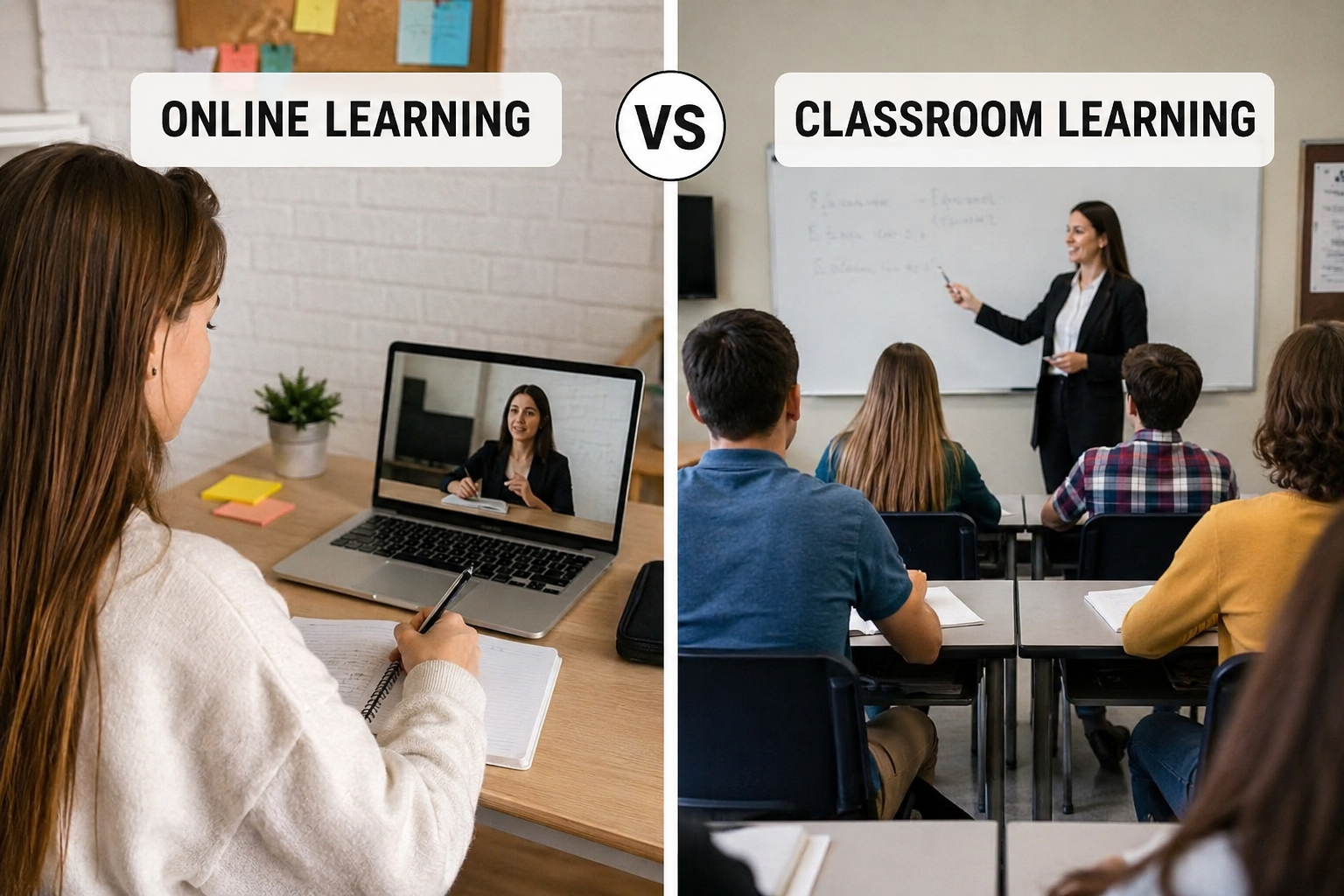
Learning has changed a lot in recent years. Students today have more choices than ever when it comes to education. They can attend a traditional classroom, study through online courses, or even use both methods together. This has created an important question for students, parents, and teachers: online learning vs classroom learning, which is better?
Both online learning and classroom learning have their own benefits and challenges. The better choice depends on the student’s learning style, goals, schedule, and personal situation. Some students learn better when they sit in a classroom with a teacher, while others prefer the freedom and comfort of studying online. Understanding the differences between these two learning methods can help students make a better decision.
What Is Online Learning?
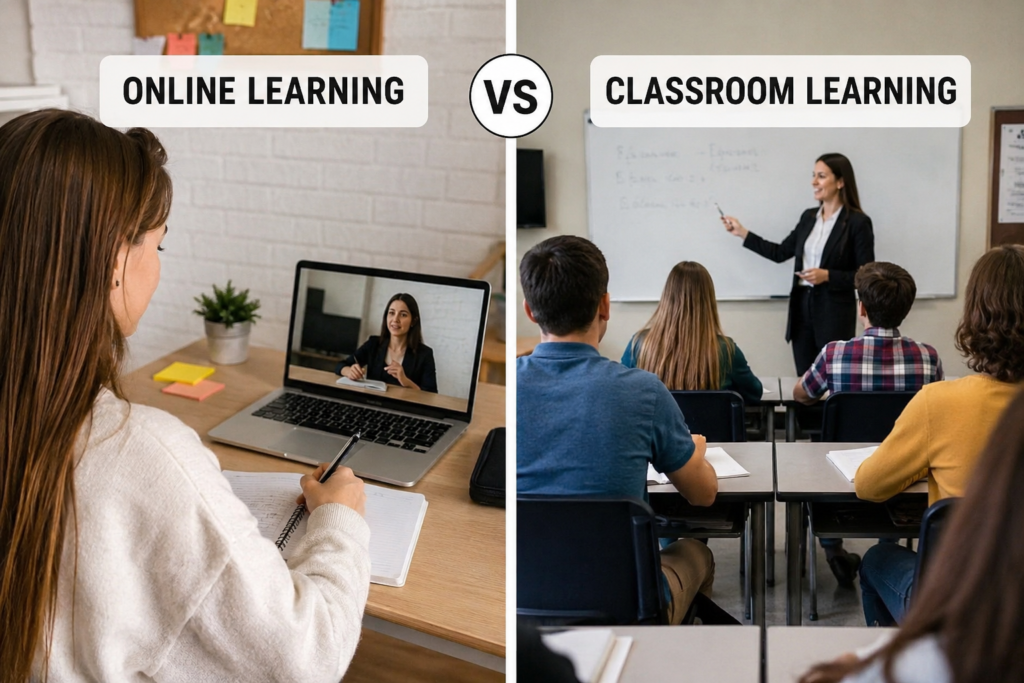
Online learning is a way of studying through the internet. Students can attend lessons using a computer, laptop, tablet, or smartphone. Online education may include video lessons, live classes, recorded lectures, online quizzes, digital books, assignments, and discussion groups.
One of the biggest advantages of online learning is flexibility. Students do not always have to attend classes at a specific location. They can study from home, a library, or another quiet place. Many online courses also allow students to watch recorded lessons at a convenient time.
Online learning has become popular because it gives students access to a large amount of educational content. A student can learn from teachers and institutions located in different cities or countries without having to travel.
What Is Classroom Learning?
Classroom learning is the traditional method of education where students and teachers meet in the same physical location. Students usually follow a fixed timetable and attend lessons at school, college, university, or another educational institution.
Classroom education gives students direct contact with teachers and classmates. Students can ask questions during a lesson and receive answers immediately. They can also take part in group discussions, classroom activities, presentations, and practical exercises.
For many students, the classroom provides a structured learning environment. Having a fixed schedule can make it easier to stay focused and complete schoolwork on time.
Flexibility of Online Learning
Flexibility is one of the biggest advantages of online learning. Students can often choose when and where they want to study. This can be especially useful for students who have jobs, family responsibilities, or busy schedules.
For example, a student may watch a recorded lecture in the evening instead of attending a live class in the morning. Students can also pause a video, replay difficult parts, and review lessons as many times as needed.
This flexibility can make online education a good choice for independent learners. However, it also requires self discipline. Without a teacher physically present, some students may find it difficult to manage their time.
Structure of Classroom Learning
Classroom learning provides a more organized routine. Students usually have a fixed time for each subject and know when they need to attend lessons. This structure can help students develop regular study habits.
Teachers can also monitor students more closely in a classroom. If a student is confused or not participating, the teacher may notice the problem and provide support.
The classroom environment can also reduce some distractions. When students are surrounded by other people who are studying, they may feel more motivated to focus on their work.
Teacher and Student Interaction
Teacher interaction is an important part of education. In a traditional classroom, students can communicate with teachers face to face. They can raise their hands, ask questions, and discuss problems directly.
Online learning also provides communication between teachers and students, but the experience can be different. Students may communicate through video calls, emails, discussion boards, or messaging systems.
For students who enjoy personal interaction, classroom learning may feel more comfortable. However, online learning can still provide good communication when courses include live classes and active teacher support.
Learning at Your Own Pace
Another major benefit of online learning is the ability to learn at your own pace. Not every student understands a topic at the same speed. Some students need more time to understand difficult concepts, while others may learn quickly.
With online lessons, students can pause and replay videos or review digital materials whenever they want. This can make learning more comfortable.
Classroom learning usually follows the pace of the teacher and the entire class. A teacher may need to move forward even when some students are still struggling with a topic. However, students can often ask questions or request additional help.
Social Interaction and Communication Skills
Classroom learning has a strong advantage when it comes to social interaction. Students spend time with classmates and teachers every day. They can participate in group projects, classroom discussions, presentations, and other activities.
These experiences can help students improve communication skills, teamwork, confidence, and leadership abilities.
Online students can also communicate with classmates through virtual meetings and online discussion groups. However, the interaction may not always feel as natural as face to face communication.
For students who want to build strong social skills, classroom learning can provide valuable opportunities.
Cost of Online Learning
The cost of education is another important factor. Online learning can sometimes be more affordable than traditional classroom education. Students may save money on transportation, accommodation, printed materials, and other daily expenses.
There are also many free or low cost educational resources available online. Students can find courses, tutorials, lectures, and study materials on many different subjects.
However, online learning still requires a reliable internet connection and a suitable device. These costs should be considered before choosing online education.
Cost of Classroom Learning
Traditional education can be more expensive because students may need to pay tuition fees, transportation costs, accommodation expenses, books, and other educational costs.
For students who live far from their school or university, travel can become a major expense. Some students may also need to move to another city for better educational opportunities.
However, classroom education provides access to physical facilities such as libraries, laboratories, sports areas, computer rooms, and other resources. These facilities can be valuable depending on the subject.
Focus and Distractions
Staying focused can be difficult in both online and classroom learning, but the type of distractions is different.
Online students may face distractions from social media, mobile phones, games, television, family members, or other websites. Since students are often studying from home, it can be difficult to create a proper study environment.
Classroom students may also experience distractions from classmates, conversations, noise, or other activities. However, the presence of a teacher can help maintain discipline.
Students who choose online learning should create a quiet study space and follow a regular schedule. These simple habits can make online education more effective.
Which Learning Method Is Better for Students?
There is no single answer to the question of which learning method is better. Online learning vs classroom learning depends on the individual student.
Online learning may be better for students who want flexibility, enjoy independent study, and can manage their time effectively. It can also be useful for students who cannot travel regularly or want to learn from institutions outside their local area.
Classroom learning may be better for students who prefer direct teacher support, face to face communication, and a structured routine. It can also be a better option for subjects that require practical training and physical activities.
Can Students Use Both Methods?
Students do not always have to choose only one method. Blended learning combines online education with traditional classroom learning.
For example, students may attend classroom lessons during the week and use online videos and digital resources for revision at home. This approach can provide the structure of classroom education along with the flexibility of online learning.
Blended learning is becoming increasingly useful because technology can support traditional education instead of completely replacing it.
How to Choose the Right Learning Method
Students should consider several factors before choosing between online and classroom learning. First, they should think about their learning style. Do they understand topics better by watching videos and reading independently, or do they prefer listening to a teacher in person?
Students should also consider their schedule. If they have a busy routine, online education may provide greater flexibility. If they need a fixed schedule to stay motivated, classroom learning may be more suitable.
The subject itself is also important. Some subjects can be studied very effectively online, while practical subjects may benefit from physical classrooms and laboratories.
Finally, students should think about their ability to manage time and stay motivated. Online learning requires responsibility and self discipline, while classroom learning provides more external structure.
Final Thoughts
Online learning and classroom learning both have important benefits. Online education offers flexibility, convenience, and access to learning resources from almost anywhere. Classroom education provides direct teacher interaction, social experiences, structure, and practical opportunities.
The best learning method depends on the student’s needs, goals, personality, and circumstances. Instead of asking whether online learning or classroom learning is always better, students should ask which method helps them learn more effectively.
For some students, online education may be the perfect choice. For others, traditional classroom education may provide a better experience. Many students may find that combining both methods gives them the best results.
In the end, successful learning is not only about where a student studies. It is also about effort, consistency, curiosity, time management, and the willingness to keep learning. Whether students choose online learning, classroom learning, or a combination of both, having the right attitude can make a major difference in their educational journey.