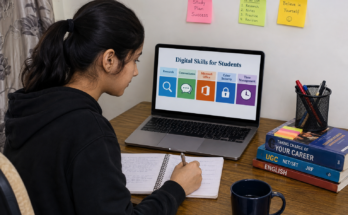

Online courses have changed the way students learn new things. Today, you do not always need to sit in a classroom to gain knowledge or develop a useful skill. With a computer, tablet, or smartphone and an internet connection, you can learn from teachers and experts from almost anywhere. However, joining an online course does not automatically mean that you will learn effectively. You need the right habits, planning, and learning methods to get the best results.
Many students start online courses with excitement but stop after watching a few lessons. Others watch many videos but forget most of the information later. The main reason is that online learning requires more self discipline than traditional classroom learning. If you know how to manage your time, take useful notes, practice what you learn, and stay consistent, online courses can become a powerful way to improve your education and skills.
Choose the Right Online Course
The first step to learning effectively with online courses is choosing the right course. There are thousands of courses available online, but not every course is suitable for you. Before joining a course, think about what you actually want to learn and why you want to learn it.
Read the course description carefully and check the topics included in the course. Look at the instructor’s experience and read reviews from other students if they are available. You should also check whether the course is suitable for beginners or advanced learners.
It is better to choose one useful course that matches your goal instead of joining many courses at the same time. Having too many courses can make you confused and reduce your focus.
Set a Clear Learning Goal
A clear learning goal can make online learning much easier. Before starting your course, decide what you want to achieve by the end.
For example, instead of saying, “I want to learn digital marketing,” create a more specific goal such as, “I want to understand how SEO works and create a basic SEO strategy.”
A specific goal gives you something to work toward. It also helps you measure your progress. When you know exactly what you want to achieve, you are more likely to stay motivated and complete your online course.
Your goal should also be realistic. Do not expect to become an expert in a complicated subject within a few days. Learning takes time, and regular progress is more important than trying to learn everything quickly.
Create a Simple Study Schedule
One of the biggest advantages of online courses is flexibility. You can often study whenever you want. However, too much flexibility can become a problem if you do not have a schedule.
Create a simple study routine that fits your daily life. You may decide to study for thirty minutes every morning or one hour every evening. The exact time is less important than being consistent.
Try to choose a time when you can focus without many distractions. If you study at the same time regularly, learning can become a normal part of your daily routine.
You do not need to spend several hours every day on an online course. Even a small amount of focused study can produce good results when you continue doing it regularly.
Find a Quiet Place to Study
Your learning environment can affect how much information you understand and remember. When studying online, try to find a quiet and comfortable place.
Keep your phone away if you do not need it for the course. Turn off unnecessary notifications and close websites that can distract you. Social media, games, messages, and random browsing can quickly take your attention away from your lesson.
A clean study area can also help you feel more prepared. You do not need an expensive desk or special equipment. A simple place where you can sit comfortably and focus is enough.
Take Useful Notes
Taking notes is one of the best ways to stay active during an online course. Instead of only watching videos, write down important ideas, examples, definitions, and questions.
Do not try to write every word the instructor says. This can slow down your learning. Focus on the information that seems important or useful.
You can use a notebook, computer, or note taking application. Choose whatever method feels comfortable for you.
After finishing a lesson, review your notes for a few minutes. This simple habit can help you remember the main ideas for a longer time.
Do Not Just Watch the Lessons
Watching online course videos can feel like studying, but watching alone is not always enough. You need to actively work with the information.
Pause the video when you need more time to understand something. Try explaining the idea in your own words. Ask yourself questions about what you just learned.
For example, if you are taking an online course about writing, do not only watch lessons about writing techniques. Write something yourself and use the techniques you learned.
Active learning helps you understand information instead of simply recognizing it.
Practice What You Learn
Practice is one of the most important parts of effective online learning. Knowledge becomes more useful when you know how to apply it.
If you are learning graphic design, create simple designs. If you are learning programming, write small programs. If you are learning a language, practice speaking and writing. If you are studying photography, take photographs and experiment with different techniques.
Do not wait until you finish the entire course before practicing. Try to use new knowledge as soon as possible.
Making mistakes during practice is normal. Mistakes can actually help you understand what you need to improve.

Review Lessons Regularly
Many students finish a lesson and never look at it again. After a few weeks, they may remember very little. Regular review can solve this problem.
Set aside some time each week to review your previous lessons. Read your notes and test yourself on important topics.
Instead of simply reading the same information again and again, try to remember it without looking at your notes. This makes your brain work harder and can improve memory.
You can also create short questions from your lessons and answer them later. This is a simple way to check whether you actually understand the material.
Take Short Breaks
Studying for a long time without a break can make you tired and reduce your concentration. Short breaks can help you stay focused.
For example, you can study for thirty or forty minutes and then take a short break. Stand up, walk around, drink some water, or relax for a few minutes.
Avoid spending your entire break scrolling through social media because it may become difficult to return to your lesson.
The goal is to give your mind a short rest before continuing your study session.
Ask Questions When You Are Confused
Online learning does not mean that you have to learn everything alone. Many online courses provide discussion areas, student communities, or ways to contact instructors.
If you do not understand something, ask a question. You can also search for another explanation from a trusted educational source.
Sometimes an instructor explains a topic in one way, but another teacher explains it more clearly. There is nothing wrong with using different resources when you need help.
Asking questions is a sign that you want to understand the subject better.
Avoid Taking Too Many Courses
It can be exciting to discover new courses online. You may want to learn business, programming, design, marketing, languages, and many other subjects at the same time.
However, taking too many online courses can reduce your progress. You may start several courses but finish none of them.
Try to focus on one main course at a time. Once you complete it or reach a useful level, you can move to another subject.
Finishing a course can also give you confidence and motivation to continue learning.
Track Your Progress
Tracking your progress can help you stay motivated. Keep a simple record of the lessons you complete, projects you create, and skills you develop.
You can make a weekly checklist and mark each completed task. Seeing your progress can remind you that your effort is producing results.
Do not compare your progress with other students. Everyone learns at a different speed. Focus on improving your own knowledge and skills.
Complete Projects
Projects are especially useful when learning practical subjects. A project gives you a chance to use different lessons together.
For example, if you are learning web design, you could create a simple website. If you are learning content writing, you could write several articles. If you are learning business, you could create a basic business plan.
Projects also give you something that you can show to others. This can be helpful when applying for internships, jobs, freelance work, or further education.
Stay Consistent
Consistency is more important than studying for many hours once in a while. A student who studies for thirty minutes every day can often make better progress than someone who studies for five hours only once a week.
There will be days when you feel tired or unmotivated. On those days, try to do at least a small part of your course. Even completing one lesson or reviewing your notes can keep your learning routine alive.
Small steps become meaningful when you repeat them over time.
Final Thoughts
Learning effectively with online courses requires more than watching videos and completing lessons. You need a clear goal, a simple study schedule, active learning, regular practice, and consistent review.
Choose an online course that matches your needs and avoid taking too many courses at once. Create a comfortable study environment and remove distractions when possible. Take useful notes, ask questions, practice your skills, and complete projects that allow you to use what you have learned.
Online learning gives students a great opportunity to improve their education and develop valuable skills. The most important thing is to take responsibility for your own learning. When you stay consistent and use the right learning methods, an online course can become much more than a collection of videos. It can be a practical path toward new knowledge, better skills, and future opportunities.