Studying for many hours does not always mean that you are learning more. Sometimes, students spend most of the day with books open but remember very little when it is time for a test. The problem is often not the amount of time spent studying. It is the way that time is used.
Learning how to study smarter instead of studying longer can help you understand lessons faster, remember important information, and feel less stressed before exams. Smart studying is about using effective study techniques, managing your time properly, staying focused, and giving your brain enough time to rest.
Whether you are in school, college, university, or preparing for an important exam, improving your study habits can make a big difference. You do not always need more hours. You need a better study strategy.
Understand What You Need to Learn
Before starting a study session, take a few minutes to understand what you actually need to learn. Many students open their books and start reading from the first page without having a clear goal. This can make studying slow and confusing.
Look at your syllabus, class notes, assignments, and upcoming tests. Make a simple list of the topics you need to cover. Then divide large topics into smaller parts.
For example, instead of writing “study biology,” write “learn the parts of the human heart,” “understand blood circulation,” and “review important terms.” Smaller goals are easier to manage and give you a clear direction.
Having a specific study goal also helps you measure your progress. When you finish a topic, you know that you have achieved something instead of simply spending another hour reading.
Use Active Recall
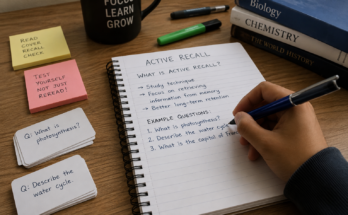
One of the most useful study techniques is active recall. Active recall means trying to remember information without looking at your notes or textbook.
Many students read the same chapter again and again because it feels productive. However, reading something several times does not always mean that you understand or remember it.
After reading a section, close your book and ask yourself questions about what you just learned. Try to explain the main idea using your own words. You can also create questions on one side of a card and answers on the other side.
For example, if you are studying history, ask yourself what caused an important event, who was involved, and what happened afterward. If you can answer without looking at your notes, you are actively practicing your memory.
Active recall makes your brain work harder in a useful way. Over time, it can improve your ability to remember information during exams.
Try Spaced Repetition
Spaced repetition is another effective way to study smarter. Instead of studying everything in one long session, review information several times over a period of days or weeks.
For example, you might learn a topic on Monday, review it on Wednesday, test yourself again on Saturday, and then review it again the following week.
This method is especially helpful for subjects that require memorization, such as vocabulary, formulas, definitions, dates, and scientific terms.
Cramming the night before an exam may help you remember some information for a short time, but much of it can quickly disappear from memory. Spaced repetition gives your brain repeated opportunities to strengthen what you have learned.
Study in Short Focused Sessions
You do not need to study for five or six hours without stopping. Long study sessions can lead to tiredness, boredom, and loss of concentration.
Instead, try studying in focused sessions. You can study for around 25 to 50 minutes and then take a short break. During the study period, focus only on the task in front of you.
A simple method is to choose one topic, set a timer, and work until the session ends. During your break, stand up, drink some water, walk around, or relax for a few minutes.
The exact length of your study session does not have to be the same for everyone. Some students concentrate better for 25 minutes, while others can stay focused for 50 minutes.
The important thing is to protect your focused time and avoid wasting it on distractions.
Remove Distractions
Your phone can easily turn a 30 minute study session into an hour of almost no learning. Social media, messages, games, videos, and notifications can constantly pull your attention away from your work.
Before studying, remove as many distractions as possible. Put your phone away or turn on a focus mode. Close unnecessary browser tabs and keep your study area clean.
If you need your computer for studying, avoid opening websites that are unrelated to your work.
A quiet and organized study environment can make it easier to concentrate. You do not need an expensive desk or special equipment. A comfortable place, good lighting, your study materials, and fewer distractions are usually enough.
Take Useful Notes
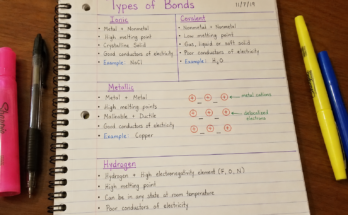
Good notes are not about writing every word that your teacher says. They should help you understand and remember the most important information.
When taking notes, focus on key ideas, examples, definitions, formulas, and important explanations. Use your own words whenever possible.
After class, review your notes and fill in anything that you did not understand. You can also turn your notes into questions for active recall.
For example, instead of writing a long paragraph about a topic, write a question such as “What are the three main causes of this process?” Then write the answer underneath.
This makes your notes more useful when you review them later.
Explain the Topic to Someone Else
Teaching someone else is a powerful way to check whether you really understand a subject.
After studying a topic, pretend that you are teaching it to a friend or younger student. Explain the concept using simple language. Avoid reading directly from your notes.
If you become confused while explaining something, that may show you where your understanding is weak. Go back to that part, study it again, and then try explaining it one more time.
You can even teach an imaginary student if nobody is available. Speaking out loud can help you organize your thoughts and notice gaps in your knowledge.
Practice With Questions
If you are preparing for an exam, do not spend all your time reading. Practice answering questions.
Use old exams, practice tests, textbook questions, quizzes, or questions created from your notes. Try answering them without checking the answer first.
Practice questions help you understand what an exam may actually require from you. They also show which topics need more attention.
When you make a mistake, do not simply look at the correct answer and move on. Understand why your answer was wrong. Mistakes can become useful learning opportunities when you review them carefully.
Prioritize Difficult Topics
Not every subject or chapter needs the same amount of time. Some topics may be easy for you, while others require more effort.
Start by identifying your weak areas. Give more study time to topics that you do not understand well.
This is one of the biggest differences between studying longer and studying smarter. Spending two hours reviewing something you already know may not help much. Spending that same time improving a difficult topic can have a much greater impact.
You should still review easy topics, but your study plan should give more attention to areas where improvement is needed.
Get Enough Sleep
Sleep is an important part of effective studying. Staying awake all night to study may seem like a good idea before an exam, but tiredness can make it harder to concentrate, think clearly, and remember information.
Your brain needs rest to process and organize what you have learned. A good night’s sleep can help you approach your studies with better attention and energy.
Instead of regularly sacrificing sleep for extra study hours, create a realistic study schedule that allows you to finish important work earlier.
Studying for fewer hours while being rested and focused can be more productive than studying for many hours while exhausted.
Use a Simple Study Schedule
A study schedule can help you avoid last minute stress. You do not need to create a complicated timetable. A simple weekly plan can be enough.
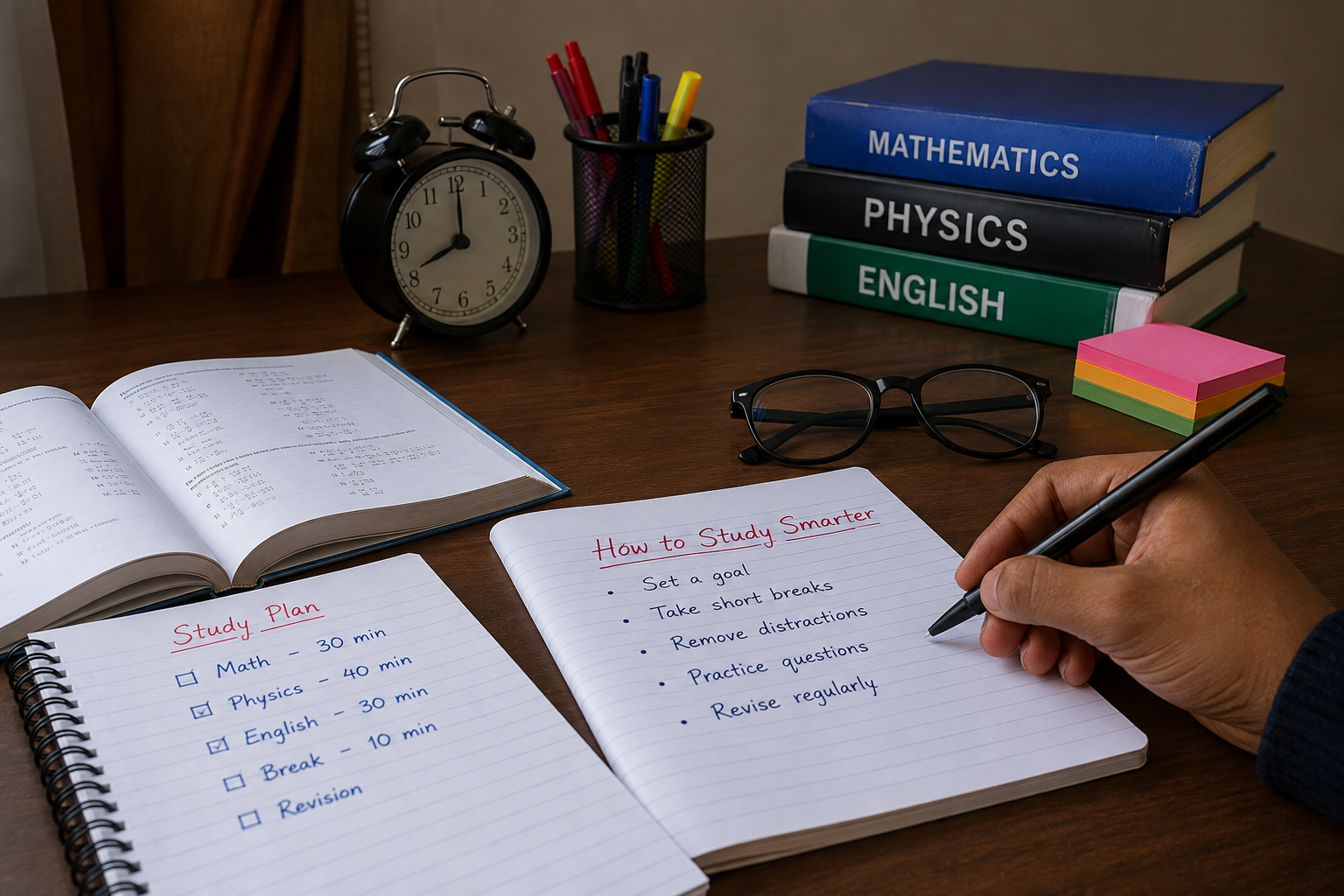
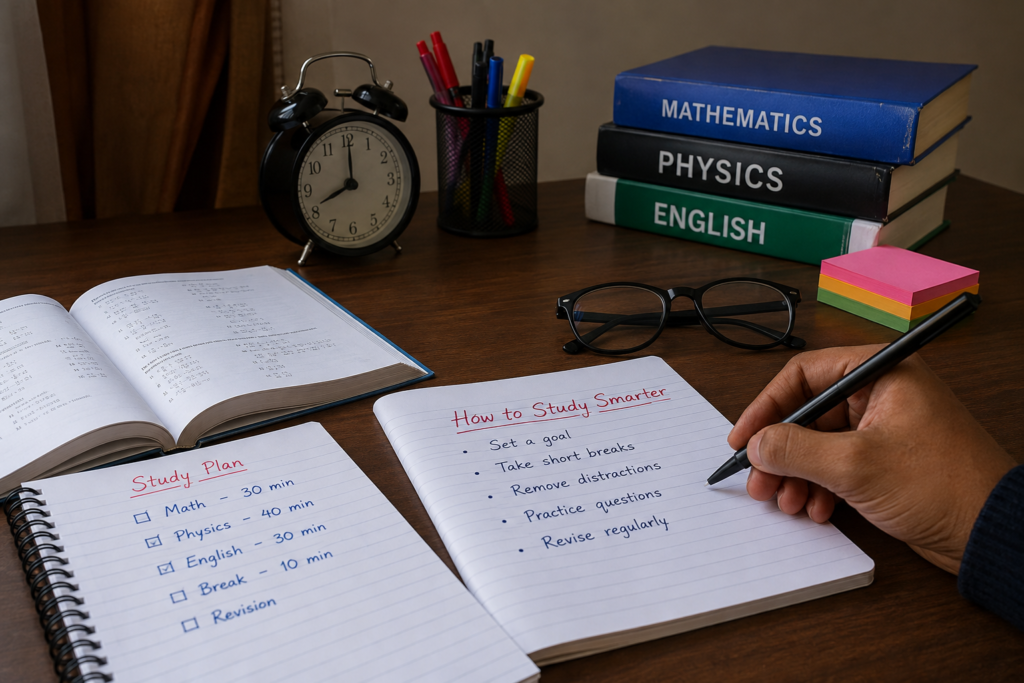
Write down your subjects and the topics you need to cover. Decide when you will study each one. Include time for practice questions, revision, breaks, and rest.
Try to spread your work across several days instead of putting everything on one day.
A realistic schedule is better than a perfect schedule that you cannot follow. Leave some flexibility because unexpected tasks and changes can happen.
Take Care of Your Body
Your physical condition can affect your ability to study. Drinking enough water, eating balanced meals, moving your body, and getting proper rest can support better concentration.
You do not need to follow an extreme routine. Simple habits can help. Take short walks during breaks, avoid sitting in one position for too long, and keep water nearby while studying.
When your body feels better, it is often easier to stay focused on difficult academic tasks.
Stop Measuring Success by Hours
One of the most important changes you can make is to stop thinking that more study hours automatically mean better results.
Instead of asking, “How many hours did I study today?” ask questions such as, “What did I learn today?” “Can I explain this topic?” and “Can I answer questions without looking at my notes?”
These questions measure actual learning rather than time spent at a desk.
A focused 90 minute study session can sometimes be more valuable than several hours of distracted reading.
Final Thoughts
Learning how to study smarter instead of studying longer is about making your study time more effective. You can improve your results by using active recall, spaced repetition, practice questions, focused study sessions, good notes, and regular revision.
You should also reduce distractions, prioritize difficult topics, maintain a realistic study schedule, and get enough sleep. These habits can help you learn more without constantly increasing the number of hours you spend studying.
Remember that effective studying is not about exhausting yourself. It is about helping your brain understand, practice, and remember information. When you use the right study techniques and make your time count, you can make steady progress while keeping your stress under control.
The goal is not to study all day. The goal is to learn well.