Technology has become an important part of student life. Students use computers, smartphones, tablets, and the internet almost every day. They use technology for studying, communication, research, assignments, presentations, and even career planning. Because of this, having good digital skills is no longer just an extra advantage. It is becoming an important part of education and future career success.
Digital skills help students work faster, learn better, and communicate more effectively. They also make it easier to find useful information and complete different academic tasks. A student who understands basic digital tools can feel more confident in school, college, university, and the workplace. In this article, we will discuss the most important digital skills every student should know and how these skills can help in everyday life.
What Are Digital Skills?
Digital skills are the abilities that help people use computers, mobile devices, software, websites, and online tools properly. These skills can be very basic, such as typing and using a web browser, or more advanced, such as creating websites, editing videos, analyzing data, or using artificial intelligence tools.
For students, digital skills are mainly about using technology in a smart, safe, and useful way. They help students complete assignments, communicate with teachers, organize information, work with classmates, and prepare for future jobs.
Basic Computer Skills
One of the first digital skills every student should learn is basic computer knowledge. Students should know how to use a computer, manage files, install basic applications, and understand common computer settings.
Students should be comfortable using a keyboard and mouse. They should also know how to create folders, rename files, copy and move documents, and save files in the correct location. These simple skills can save a lot of time when working on school projects.
It is also useful to understand common file types such as PDF, DOCX, JPG, PNG, and PPTX. Knowing the difference between these formats can help students choose the right format when submitting assignments or sharing documents.
Internet Research Skills
The internet contains a huge amount of information, but not everything online is accurate. Students need strong internet research skills to find reliable information for their studies.
A good student should know how to use search engines effectively. Instead of typing a very general search, students can use specific keywords to find better results. They should also compare information from different websites before using it in an assignment.
Checking the source is another important part of online research. Students should look at who created the information, when it was published, and whether the website is trustworthy. This can help them avoid false information and poor quality sources.
Good research skills also help students find books, academic papers, educational videos, online courses, and other useful learning resources.
Microsoft Office and Google Workspace
Students often need to create documents, presentations, and spreadsheets. Because of this, knowing how to use office software is an important digital skill.
Microsoft Word and Google Docs can help students write assignments, reports, essays, and notes. They should know how to format text, create headings, add images, insert tables, and check spelling.
PowerPoint and Google Slides are useful for presentations. Students should learn how to create simple slides, organize information, and present ideas clearly.
Excel and Google Sheets are useful for working with numbers and data. Students can use spreadsheets to create tables, calculate results, organize information, and make simple charts.
These tools are useful not only in education but also in many different careers.
Online Communication Skills
Communication is another important digital skill for students. Students often communicate with teachers, classmates, group members, and other people through email, messaging apps, and online learning platforms.
Students should know how to write a clear and professional email. An email should have a useful subject line and a polite message. Students should avoid sending unclear or incomplete messages, especially when communicating with teachers or future employers.
Online communication also requires good manners. Students should think before posting comments or sending messages. Being respectful online is just as important as being respectful in person.
Cybersecurity Awareness
Every student should understand basic cybersecurity. Students use online accounts for education, social media, banking, shopping, and many other activities. Without basic security knowledge, their personal information can be at risk.
Students should create strong and unique passwords for important accounts. Using the same password everywhere can be dangerous because if one account is hacked, other accounts may also become vulnerable.
Students should also understand phishing. Phishing messages often try to trick people into clicking harmful links or sharing passwords and personal information. Students should be careful with unknown emails, suspicious messages, and websites that ask for sensitive information.
Using two factor authentication where available can provide another layer of account security.
Digital Privacy
Digital privacy is another important skill in the modern world. Students should understand that information shared online can sometimes stay available for a long time.
Before posting photos, comments, personal information, or other content, students should think about how it could affect them in the future. They should also review privacy settings on social media accounts and avoid sharing sensitive information publicly.
Learning about digital privacy can help students protect themselves and build a positive online presence.
Time Management With Digital Tools
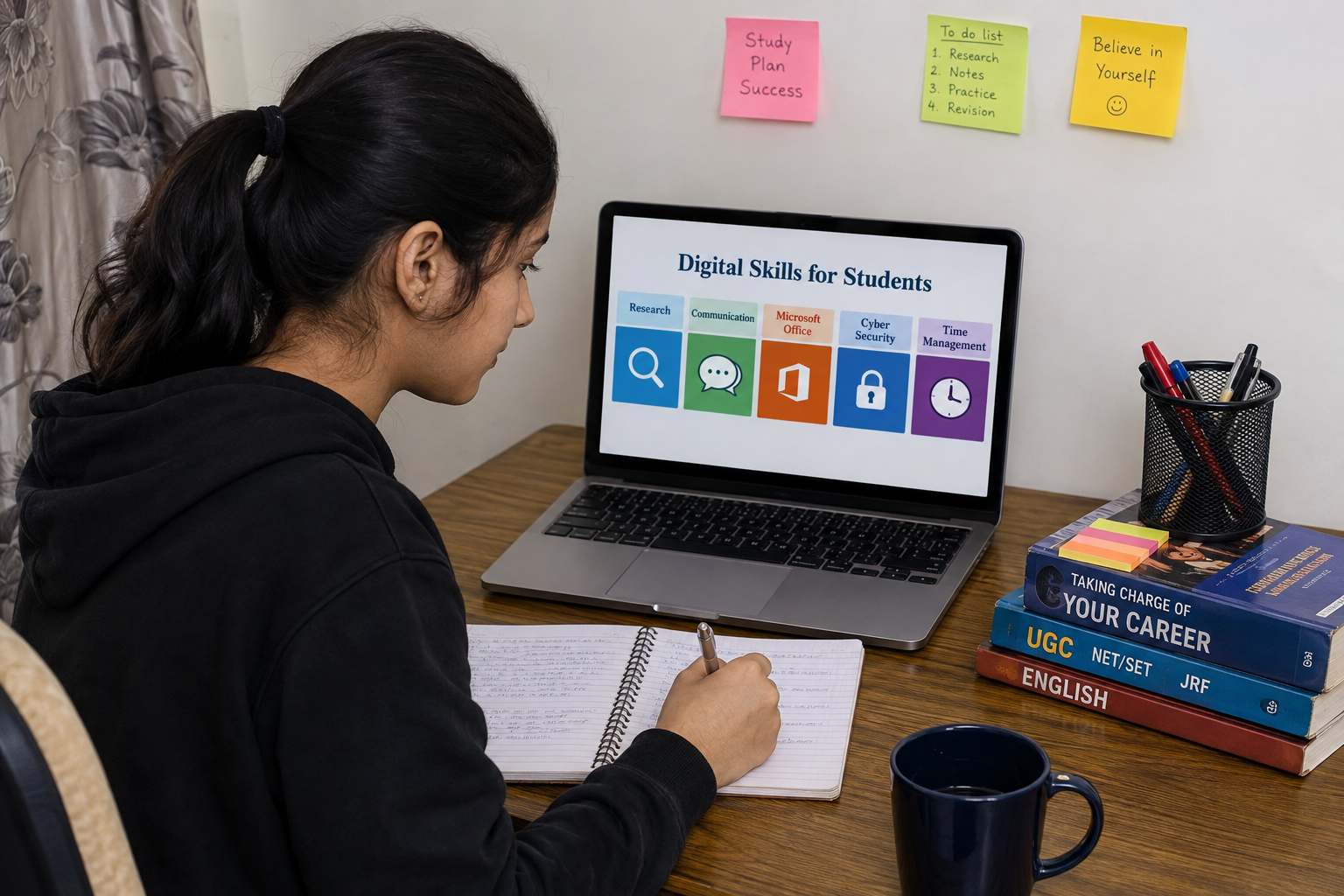
Technology can help students manage their time, but it can also become a major distraction. Social media, games, videos, and notifications can make it difficult to focus on studying.
Students can use digital calendars, reminder apps, task management tools, and study apps to organize their daily activities. They can create a list of assignments, set deadlines, and divide large projects into smaller tasks.
A simple digital study schedule can make a big difference. When students know what they need to do and when they need to do it, they are less likely to leave everything until the last minute.
Online Learning Skills
Online learning has become a common part of education. Students should know how to learn effectively through digital platforms.
This includes joining online classes, watching educational videos, downloading course materials, submitting assignments, and participating in online discussions.
Online learning also requires self discipline. Without a teacher sitting in front of them, students need to manage their own study time. They should avoid unnecessary distractions and take notes while watching online lessons.
Students should also know how to ask questions online when they do not understand something. Good online learning skills can help students continue learning outside the classroom.
Artificial Intelligence Skills
Artificial intelligence is becoming an important part of education and work. Students should understand how to use AI tools responsibly and effectively.
AI can help students understand difficult topics, generate ideas, improve writing, create study questions, and organize information. However, students should not depend completely on AI for their learning.
It is important to check AI generated information because it can sometimes contain mistakes. Students should use AI as a learning assistant rather than simply copying its answers.
Learning how to write clear prompts is also becoming a useful digital skill. A clear question usually produces a more useful response.
Digital Content Creation
Students can benefit from learning basic content creation skills. This can include creating presentations, editing images, making simple videos, recording audio, or designing social media content.
Content creation can help students express their ideas in creative ways. It can also become useful when building a portfolio for university applications or future jobs.
Students do not need to become professional designers or video editors. Basic knowledge of tools such as presentation software, image editors, and video editing applications can still be very valuable.
File Management and Cloud Storage
Keeping digital files organized is an important skill that students sometimes ignore. A messy computer can make it difficult to find important assignments and documents.
Students should create separate folders for different subjects or projects. Files should have clear names so they can be found easily later.
Cloud storage services can also help students keep their files safe and accessible from different devices. Students should regularly back up important documents to avoid losing their work because of a computer problem.
Problem Solving and Troubleshooting
Technology does not always work perfectly. Students may experience problems such as a slow computer, internet connection issues, missing files, or software errors.
Basic troubleshooting skills can help students solve simple problems without immediately asking someone else for help. Restarting a device, checking the internet connection, updating software, checking storage space, and searching for reliable solutions online are useful first steps.
Problem solving is an important skill because technology changes quickly. Students who can learn and solve basic problems independently are usually more confident with digital tools.
Why Digital Skills Matter for Future Careers
Digital skills can have a direct effect on a student’s future career. Almost every modern workplace uses technology in some way. Employers may expect workers to use email, office software, online platforms, communication tools, and other digital systems.
Students who develop these skills early can enter the workplace with greater confidence. Digital skills can also make a resume stronger because they show that a student is comfortable learning and using modern technology.
The most important thing is not to learn every digital tool available. Instead, students should develop the ability to understand technology, learn new tools, protect their information, and use digital resources responsibly.
Final Thoughts
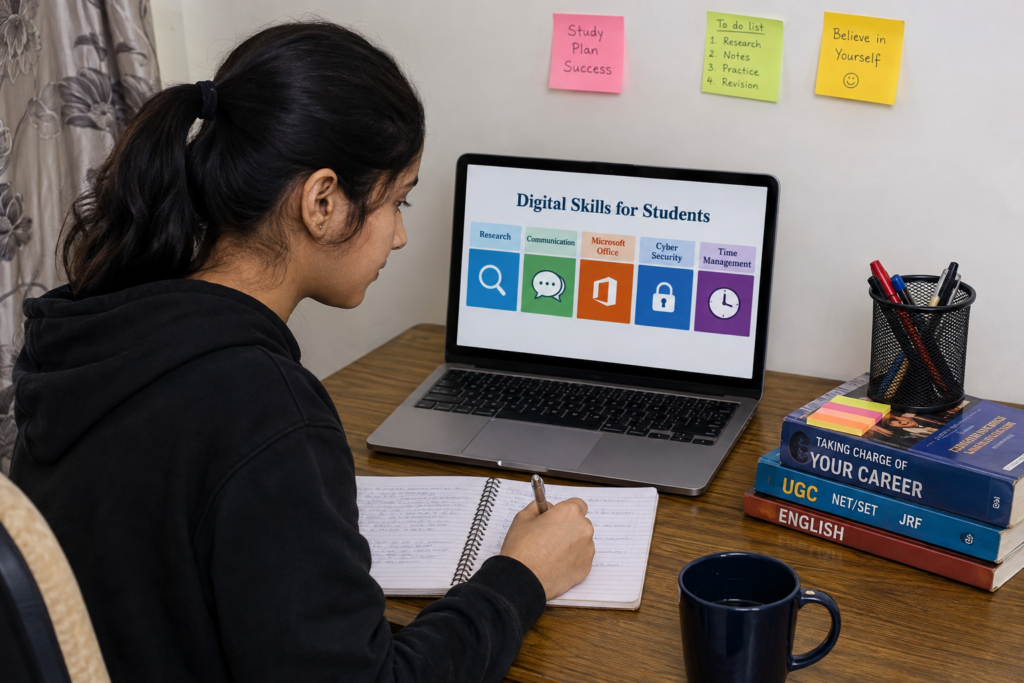
Digital skills every student should know are not limited to using a computer or browsing the internet. They include research, communication, cybersecurity, online learning, time management, artificial intelligence, content creation, and problem solving.
Technology will continue to change, and new tools will appear in the future. Students who develop strong digital skills today will be better prepared to adapt to those changes.
The best way to improve digital skills is through regular practice. Students can start with simple tasks and slowly learn more advanced tools. Even spending a little time each week learning something new can make a big difference.
Digital skills are useful for school, college, university, work, and everyday life. By learning how to use technology wisely and responsibly, students can improve their education, become more productive, and prepare themselves for a successful future.