Studying every day can feel difficult when you do not have a proper plan. Many students sit with their books for several hours but still feel like they have not learned enough. The problem is often not the amount of time they spend studying. The real problem is the lack of a good daily study routine.
A daily study routine helps you organize your time, stay focused, and make steady progress. You do not need to study all day to get good results. You need a routine that matches your lifestyle, your goals, and your learning style. Once you create a study routine that actually works for you, studying can become easier and less stressful.
Why a Daily Study Routine Is Important
A daily study routine gives your day a clear structure. When you know what you need to study and when you need to study it, you waste less time deciding what to do. This can help you avoid procrastination and make better use of your free time.
A regular study routine also helps your brain get used to learning at a specific time. For example, if you study every evening after dinner, your mind slowly starts to recognize that time as study time. This makes it easier to begin your work instead of spending a long time trying to motivate yourself.
Another important benefit is consistency. Studying for one hour every day can be more useful than studying for seven hours once a week. Small daily efforts can build strong knowledge over time.
Start With Your Study Goals
Before creating a daily study schedule, think about what you want to achieve. Your goals should be clear and realistic. You may want to improve your grades, prepare for an exam, complete assignments, learn a new subject, or simply understand your lessons better.
Write down your main study goals and then divide them into smaller tasks. For example, instead of writing “study science,” write “read chapter three and answer ten questions.” A smaller task feels easier to complete and gives you a clear target.
Your study goals should also have a time frame. If you have an exam in three weeks, you can divide the topics across those three weeks. This prevents you from trying to learn everything at the last minute.
Choose the Best Time to Study
Everyone has different energy levels during the day. Some students can focus better in the morning, while others feel more active in the afternoon or evening. There is no single perfect study time for everyone.
Pay attention to the time when you feel most awake and focused. If you feel fresh in the morning, use that time for difficult subjects. If your energy is better in the evening, plan your important study sessions for later in the day.
Try to keep your study time consistent. You do not have to follow the exact same schedule every day, but having a regular pattern can make your routine easier to follow.
Make a Realistic Study Schedule
One of the biggest mistakes students make is creating a study schedule that is too difficult. They may plan to study for eight or ten hours every day, even though they cannot realistically maintain that routine.
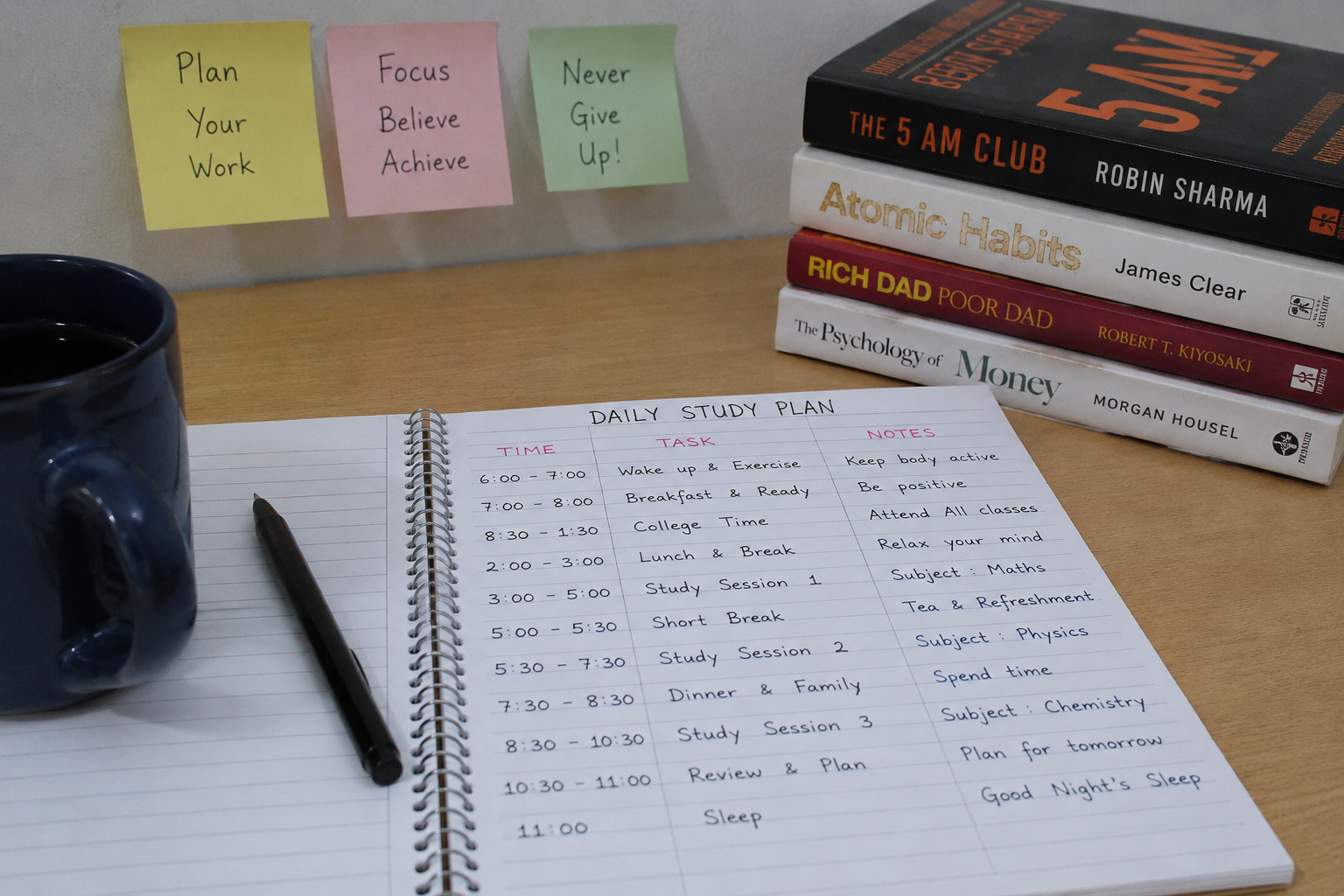
A good study schedule should fit your actual life. Include school, college, work, family responsibilities, meals, exercise, rest, and sleep. After considering these things, decide how much study time you can honestly manage.
For many students, a few focused study sessions are better than sitting with books for the entire day. Start with a manageable amount of study time and increase it when you become comfortable with your routine.
Use Short and Focused Study Sessions
Long study sessions can make you tired and reduce your concentration. Instead of studying continuously for several hours, divide your study time into shorter sessions.
For example, you can study for 45 minutes and then take a 10 minute break. During your study session, focus only on the task in front of you. During your break, stand up, drink water, stretch, or walk around for a few minutes.
The goal is not to spend the maximum number of hours studying. The goal is to make the hours you study more productive.
Remove Distractions
Distractions are one of the biggest problems for students today. Phones, social media, videos, games, messages, and notifications can quickly take your attention away from your books.
Before starting your study session, remove as many distractions as possible. Put your phone away or turn off unnecessary notifications. Keep only the books and materials you need on your desk.
If you use your computer for studying, avoid opening websites or applications that are not related to your work. A clean and quiet study environment can make a big difference in your concentration.
Prioritize Difficult Subjects
Not every subject requires the same amount of effort. Some topics may be easy for you, while others may take much more time to understand.
Try to study difficult subjects when your energy and concentration are at their highest. If you are a morning person, you can use the morning for challenging topics. If you focus better at night, schedule difficult subjects during your evening study time.
Do not spend your best study hours only on easy tasks. Use that time to work on the areas where you need the most improvement.
Take Proper Breaks
Breaks are an important part of a successful study routine. Some students believe that studying without breaks means they are working harder, but this can actually make learning more difficult.
Your brain needs time to rest and process information. Short breaks can help you return to your studies with better attention.
However, be careful with your break activities. Checking social media for five minutes can easily become thirty minutes. Choose activities that help you relax without taking too much time.
Use Active Study Methods
Simply reading your notes again and again is not always the best way to learn. A better study routine should include active learning methods.
Try explaining a topic in your own words. Ask yourself questions about what you have learned. Practice answering questions without looking at your notes. Create simple summaries or teach the topic to someone else.
Practice tests are also useful, especially when preparing for exams. They help you understand what you already know and show you which areas need more attention.
The more actively you use information, the easier it can become to remember it.
Review What You Learned
Reviewing your lessons regularly is an important part of an effective study routine. If you study something once and never look at it again, you may forget much of it later.
Spend a few minutes reviewing older topics during your weekly study sessions. You can review your notes, answer practice questions, or try to explain the topic without looking at your book.
Regular review can help move information into your long term memory. It can also reduce the amount of work you need to do before an exam.
Set Daily Study Priorities
At the beginning of each study day, decide what you want to complete. Try to choose two or three important tasks instead of creating a huge list.
For example, your daily study goals could be reading one chapter, completing an assignment, and reviewing yesterday’s lesson. Once these tasks are finished, you can move on to additional work.
Having clear daily priorities helps you stay organized. It also gives you a feeling of progress when you complete each task.
Do Not Ignore Sleep and Rest
Sleep is often forgotten when students create a study routine. Many students stay awake late at night because they believe more study hours will automatically lead to better results.
However, your brain needs proper rest to learn and remember information. Lack of sleep can make it harder to focus, understand new topics, and remember what you studied.
Try to maintain a regular sleep schedule and give yourself enough time to rest. A rested student can often study more effectively than a tired student who spends twice as many hours with books.
Make Your Routine Flexible
A daily study routine should guide you, not control your entire life. Sometimes unexpected things happen. You may have a family event, an extra assignment, an important appointment, or simply a difficult day.
If you miss one study session, do not think that your entire routine has failed. Adjust your schedule and continue the next day.
The best study routine is flexible enough to handle real life. Do not aim for perfection. Aim for consistency.
Track Your Progress
Tracking your progress can help you understand whether your study routine is actually working. At the end of each week, look at what you completed.
Ask yourself which subjects improved, which tasks were difficult, and where you wasted time. If your schedule feels too heavy, make it simpler. If you have extra time, you can add another study session.
Your routine should improve as you learn more about yourself. There is nothing wrong with changing your schedule when something is not working.
Build the Habit Slowly
Do not expect yourself to follow a perfect study routine from the first day. Building a habit takes time.
Start with a simple routine that you can actually follow. For example, begin with one or two focused study sessions each day. Once this becomes normal, you can gradually increase your study time if needed.
The most important thing is to show up every day and make steady progress. Even on days when you do not feel highly motivated, completing a small amount of work can keep your habit alive.
Final Thoughts
Building a daily study routine that actually works does not mean studying from morning until night. It means using your available time wisely and creating a system that you can maintain.
Start by setting clear study goals, choosing suitable study times, creating a realistic schedule, removing distractions, and taking regular breaks. Use active study methods and review your lessons often. Most importantly, give yourself enough sleep and rest.
A successful study routine is not about being perfect. It is about being consistent. When you study a little every day and continue improving your routine, you can become more confident, organized, and prepared for your academic goals.
Remember that the best daily study routine is the one you can follow for a long time. Keep it simple, stay consistent, and focus on progress instead of perfection. With the right routine, you can study smarter, manage your time better, and achieve better results without feeling like you have to study all day.