Taking good notes is one of the most useful study skills for students. Whether you are in school, college, or university, the way you take notes can make studying easier and help you remember information for a longer time. Many students write down almost everything a teacher says, but this does not always lead to better learning. Good note taking is about understanding important ideas, organizing information, and making your notes easy to review later.
There are many note taking methods for students, and the best method depends on your subject, learning style, and personal preference. Some students like simple bullet points, while others prefer charts, diagrams, or structured pages. In this article, we will look at the best note taking methods and explain how you can use them to study smarter and remember what you learn.
Why Good Note Taking Is Important
Good notes give you something useful to review before a test or exam. Instead of reading a whole textbook again, you can look at your notes and quickly find the main ideas. Note taking also helps you stay focused during class because you are actively listening and thinking about the information.
When students take notes correctly, they are not just copying words. They are processing information and deciding what is important. This can improve understanding and memory. Good notes can also reduce stress because you have organized study material ready when you need it.
The goal is not to create perfect notes. The goal is to create notes that help you understand and remember the topic.
1. Cornell Note Taking Method
The Cornell note taking method is one of the most popular note taking methods for students. It is simple, organized, and especially useful when preparing for exams.
To use the Cornell method, divide your page into three sections. The largest section is used for your main notes. A smaller section on the left is used for questions, keywords, or important points. The bottom section is used to write a short summary of the topic.
During class, write the main information in the large section. After class, add important questions or keywords to the left side. Then write a short summary at the bottom.
This method is useful because it encourages students to review their notes instead of simply writing them and forgetting about them. The questions on the left side can also help you test yourself later.
2. Outline Note Taking Method
The outline method is another easy way to take notes. It works especially well for subjects that have clear topics, subtopics, and supporting details.
Start with the main topic and then add smaller points underneath it. You can use indentation to show the relationship between different ideas.
For example, if you are studying biology, your notes might begin with a main topic such as the human digestive system. Under that topic, you can list the stomach, small intestine, large intestine, and other important parts. Then you can add details under each part.
The outline method keeps information organized and makes it easier to understand how different ideas are connected. It is also easy to review before an exam.
3. Mind Mapping
Mind mapping is a great note taking method for students who like visual learning. Instead of writing information from top to bottom, you place the main topic in the center of the page and connect related ideas around it.
For example, if your main topic is climate change, you can write it in the center. From there, you can create branches for causes, effects, solutions, greenhouse gases, and important examples.
Mind maps can help you see connections between ideas. They are especially useful for subjects that involve many related concepts. You can also use different shapes or simple drawings to make important information easier to remember.
You do not need to make your mind maps complicated. A simple structure with clear keywords can be more useful than a page full of unnecessary details.
4. Charting Method
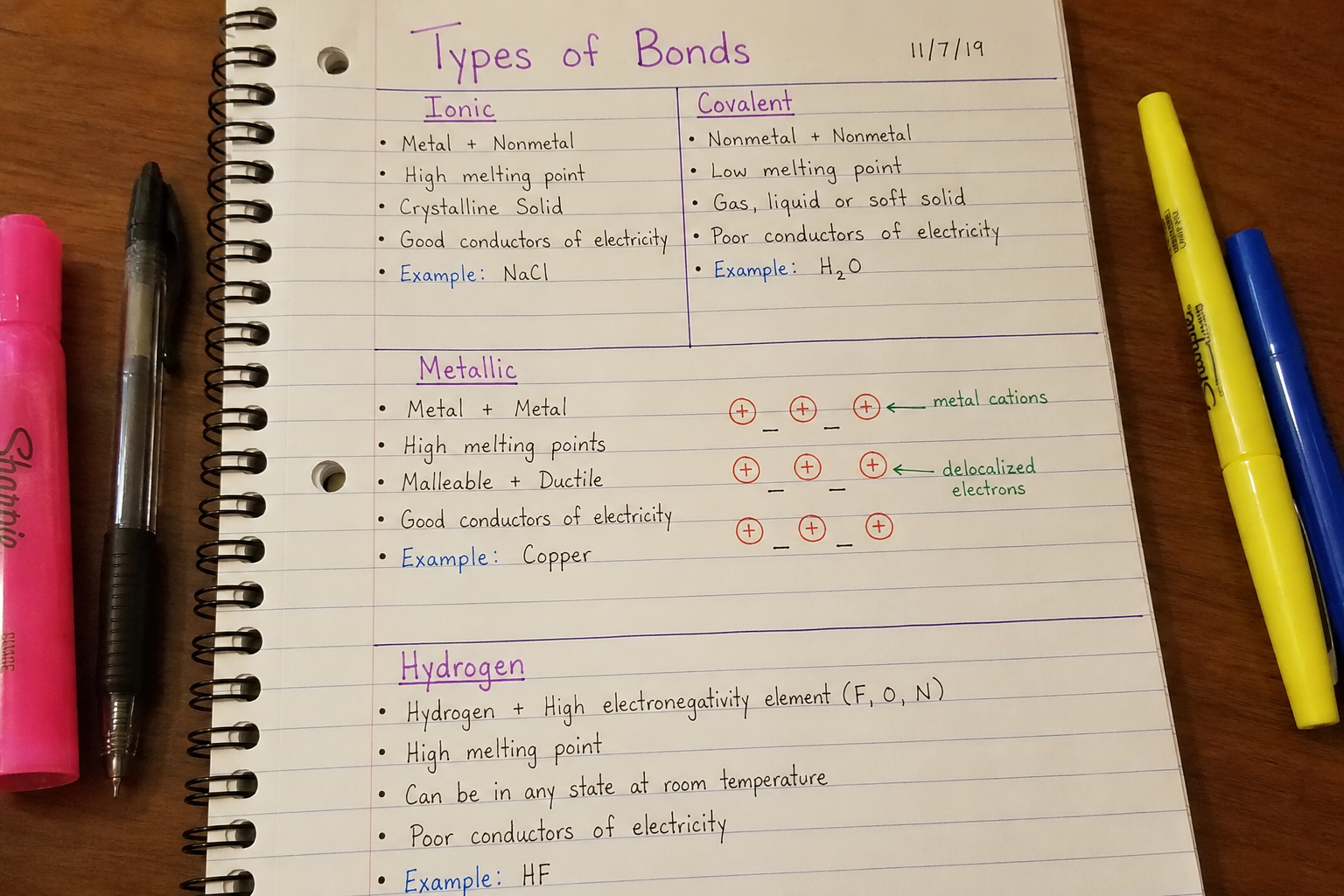
The charting method is useful when you need to compare different things. You create columns and place related information under each heading.
For example, students studying history can create columns for different countries, leaders, dates, events, and results. Students studying science can use charts to compare different animals, diseases, chemicals, or scientific theories.
The main advantage of charting is that it makes comparisons easy. Instead of reading several paragraphs, you can quickly look across the page and see the differences and similarities.
This method is particularly helpful before exams because comparison charts can turn a large amount of information into a simple format.
5. Sentence Note Taking Method
The sentence method is one of the simplest ways to take notes. You write each important idea as a short sentence or point.
This method can be useful when a teacher is speaking quickly and you do not have enough time to organize your notes during the lesson. You can focus on capturing the important information and organize it later.
However, avoid writing every sentence your teacher says. Try to identify the main idea and write it in your own words.
For example, instead of writing a long explanation about photosynthesis, you can write that plants use sunlight, water, and carbon dioxide to produce food and release oxygen.
Writing information in your own words can also help you understand it better.
6. Flowchart Note Taking
Flowcharts are useful for subjects that involve steps, processes, or sequences. They show what happens first, what happens next, and how one step leads to another.
For example, students studying science can use flowcharts to explain the water cycle. Students studying computer science can use them to understand how a program works. They can also be useful for explaining historical events or mathematical processes.
A flowchart can make complicated information much easier to understand. Instead of reading a large paragraph, you can follow the process visually from one step to the next.
7. The Boxing Method
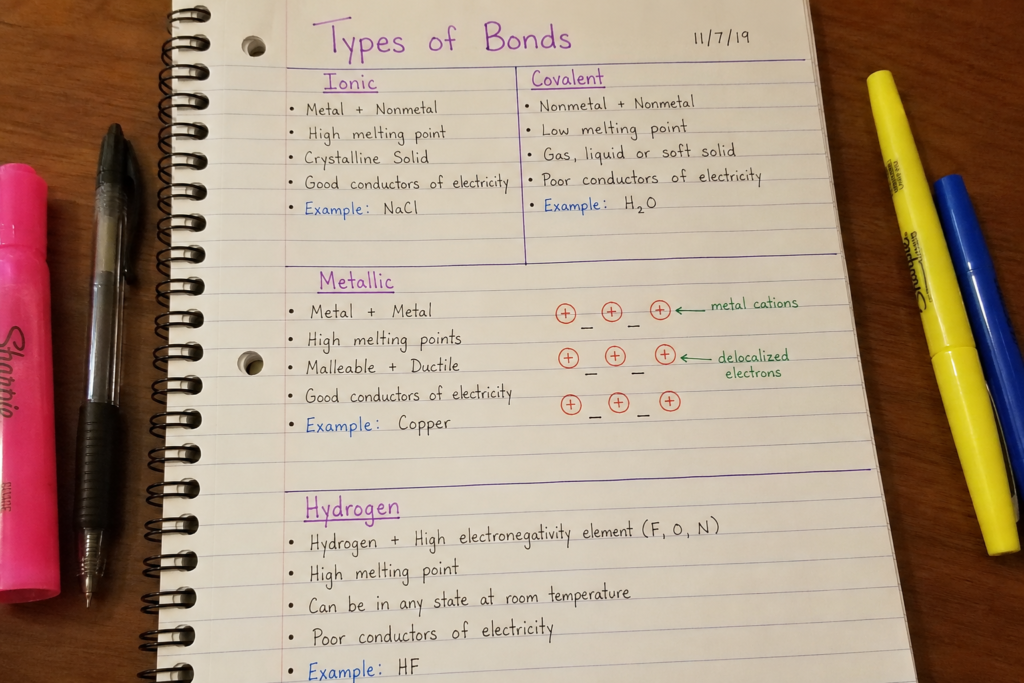
The boxing method involves placing related information inside separate boxes. Each box focuses on one topic or idea.
This method can make notes look clean and organized. It is useful when you are studying several topics in the same lesson.
For example, you could have one box for definitions, another for examples, another for important facts, and another for questions.
The boxing method works particularly well for digital notes, but it can also be used in a notebook. The main idea is to keep related information together so you can find it quickly during revision.
How to Choose the Best Note Taking Method
There is no single best note taking method for every student. Your choice should depend on the type of subject and the way you learn.
If you like organized information, try the Cornell method or outline method. If you are a visual learner, mind maps and flowcharts may work better for you. If you need to compare information, charting can be very effective.
You can also combine different methods. For example, you might use the outline method during class and create a mind map when reviewing the topic at home.
The most important thing is to choose a method that makes your notes useful for studying.
Tips for Taking Better Notes
Good note taking is not only about choosing a method. Your habits also matter.
First, listen carefully before writing. Try to understand the main idea instead of copying everything.
Second, use your own words whenever possible. This helps you process the information instead of simply copying it.
Third, focus on keywords and important facts. You do not need to write every small detail.
Fourth, use simple headings. Clear headings make your notes easier to scan when you are studying.
Fifth, review your notes soon after class. Even five or ten minutes of review can help you remember the information better.
Finally, leave some space in your notes. You may remember additional information later or want to add questions and examples.
Common Note Taking Mistakes Students Should Avoid
One common mistake is trying to write everything. This can make students focus more on writing than listening. Another mistake is making notes too complicated. Using too many colors, decorations, or symbols can waste time without improving learning.
Some students also take notes but never review them. Notes only become valuable when you use them for revision, practice, and self testing.
Another mistake is copying information word for word from textbooks or presentations. When possible, summarize ideas in your own words. This makes your notes more personal and easier to understand.
Digital Note Taking vs Paper Notes
Many students now use laptops, tablets, and mobile devices for note taking. Digital notes can be convenient because they are easy to edit, search, organize, and store.
Paper notes can also be very effective. Writing by hand can encourage students to slow down and process information instead of copying quickly.
There is no universal winner between digital and handwritten notes. Choose the option that helps you stay focused and makes reviewing easier.
Final Thoughts
The best note taking methods for students are the ones that help you understand information and remember it later. Cornell notes, outline notes, mind maps, charts, sentence notes, flowcharts, and boxing are all useful methods, but you do not have to use only one.
Try different note taking techniques and see which ones work best for your subjects. Keep your notes simple, organized, and focused on important ideas. Most importantly, review your notes regularly and use them for active learning.
Good note taking is a skill that improves with practice. Once you find a method that works for you, studying can become more organized, less stressful, and more effective. Instead of spending hours reading the same material again, you can use clear and useful notes to prepare for classes, assignments, and exams with greater confidence.